AI & Machine Learning
- Artificial Intelligence (AI), Machine Learning, Deep Learning
- Explainable AI (XAI) and Responsible AI
- Generative AI and Foundation Models
23rd International Conference
April 24–26, 2026 · Struga, North Macedonia
The International Conference on Informatics and Information Technologies is the 23rd of the series organized by the Faculty of Computer Science and Engineering (FCSE), UKIM — Ss. Cyril and Methodius University in Skopje.

Submit cutting‑edge work across these focus areas.
Submit your paper and track important dates for CIIT 2026.
*The Microsoft CMT service was used for managing the peer-reviewing process for this conference. This service was provided for free by Microsoft and they bore all expenses, including costs for Azure cloud services as well as for software development and support.
All papers must be original and not simultaneously submitted to another journal or conference. The following paper categories are welcome:
Please use the IEEE Conference proceedings manuscript template. Papers that don’t comply with the rules in the template will not be reviewed and will not be considered for publishing.
Submit Paper to CIIT2026In order to register, please send us an email to ciit@finki.ukim.mk with your Name, Surname, affiliation and payment confirmation.
At least one author per paper has to be registered in order to be able to give the presentation at the conference. Only registered and presented papers will be published in the conference proceedings.
Registered regular participants can publish one additional accepted paper free of charge.
In order to prepare an invoice, we need information about who the invoice should address to (who will pay the invoice). If the payer is an individual, we need the person’s Name, Surname, affiliation, and correspondence address. On the other hand, if the payer is an institution, we need the name of the institution and address data.
We will send you the invoice after receiving the required info.
Note: Citizens of the Republic of North Macedonia might use the following payment details:
CIIT 2026
Keynote Speakers

Commonsense AI: Abstraction, Reasoning, and the Myth of Universality
Abstract
Seventy years after the Dartmouth workshop, AI paradigms have evolved dramatically. Yet, despite the superhuman performance of foundation models on specialized tasks, robust commonsense reasoning remains an elusive challenge. This talk provides a framework for commonsense reasoning, bridging AI, cognitive psychology, and linguistics. I will examine the evolution of AI models through the lens of abstraction tasks, such as drawing analogies in narratives, understanding causality in videos, and decoding brain teasers. Specifically, I will discuss methods that combine neural learning with structural reasoning—such as entailment trees and structural mapping engines—which show promise in addressing these complexities. Finally, I will critically reflect on the term 'commonsense AI' itself, challenging the assumption that such knowledge is universally shared.
Bio
Filip Ilievski is an Assistant Professor at Vrije Universiteit (VU) Amsterdam and an affiliated scientist at USC’s Information Sciences Institute. He is also a member of the ELLIS Unit Amsterdam Management Team and a scientific coordinator at the Digital Sustainability Center (DiSC). Dr. Ilievski’s research investigates the development of human-centric AI, specializing in commonsense reasoning, neurosymbolic methods, and analogy. He currently leads the NWO-funded "Human-Centric AI with Common Sense" project, where he collaborates with cognitive and communication scientists to bridge the gap between neural learning and structural reasoning, and between theories and computational methods.
With over 100 peer-reviewed publications and two books, Dr. Ilievski has developed foundational resources for the field, including the CSKG (a consolidated graph of commonsense knowledge), multimodal benchmarks, and novel methods for visual abstraction. He is an active organizer of workshops and tutorials at major AI conferences like AAAI, ACL, and IJCAI. Recently, his work highlighting the challenges of visual abstraction in AI was featured in a BBC series.
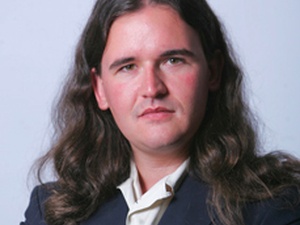
AI in aviation: why on collision course?
Abstract
In spite of being one of the most advanced industry in the planet, novel approaches from Artificial Intelligence and Deep Learning are seldom applied in air transport. The natural question is, why? In this talk we will review some solutions that have been proposed to integrate AI and DL approaches in air transport and air traffic management, from delays' prediction to separation assurance; and, more importantly, where and why they fail. Using some research works done in my group as starting point, we will discuss how both fields can be merged: in which topics can air transport get a real benefit, and which properties the solutions need to have to be operationally feasible.
Bio
Massimiliano received his Ph.D. degree in Electrical and Computer Engineering from the Universidade Nova de Lisboa, Portugal, in 2014. He is currently a researcher at CSIC-IFISC, where he coordinates the ERC Starting Grant ARCTIC. With more than 140 peer-reviewed publications in international conferences and journals, he has extensive experience in data mining and machine learning research, covering both theory and applications, and has collaborated with scientists from all over the world. His main research interests include Data Science and its application to real-world problems, including the modelling and understanding of air transport systems and the analysis of complex biomedical datasets. He is a member of the editorial team of Nature Scientific Reports, the European Journal of Social Behavior, PeerJ, PeerJ Computer Science, and Complexity.
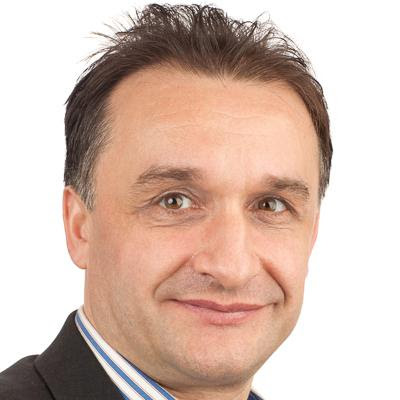
Cryptography and AI, An LLM Framework For Cryptography Over Chat Channels
Abstract
I will address the recent trends and open problems at the intersection of modern Cryptography and the disruptive field of Artificial Intelligence. Then I will describe recent work conducted with two of my PhD students on defining a framework for performing a full set of cryptographic operations over the message space provided by modern LLMs. We proposed a novel cryptographic embedding framework that enables covert Public Key or Symmetric Key encrypted communication over public chat channels with human-like produced texts. Some unique properties of our framework are: 1. It is LLM agnostic, i.e., it allows participants to use different local LLM models independently; 2. It is pre- or post-quantum agnostic; 3. It ensures indistinguishability from human-like chat-produced texts. Thus, it offers a viable alternative where traditional encryption is detectable and restricted.
Bio
Danilo Gligoroski got the Ph.D. degree in computer science from Ss Cyril and Methodius University in Skopje in 1997. From 1997 to 2008, he was an Assistant Professor in the Faculty of Natural Sciences at Skopje University. Since 2008, he is a Professor of information security and cryptography with the Norwegian University of Science and Technology (NTNU). He is an author of more than 180 scientific publications and more than 10 inventions.
His main research interests are in the application of various algebraic structures in cryptography, information security, and coding theory.
Three days of talks, workshops, and poster sessions.
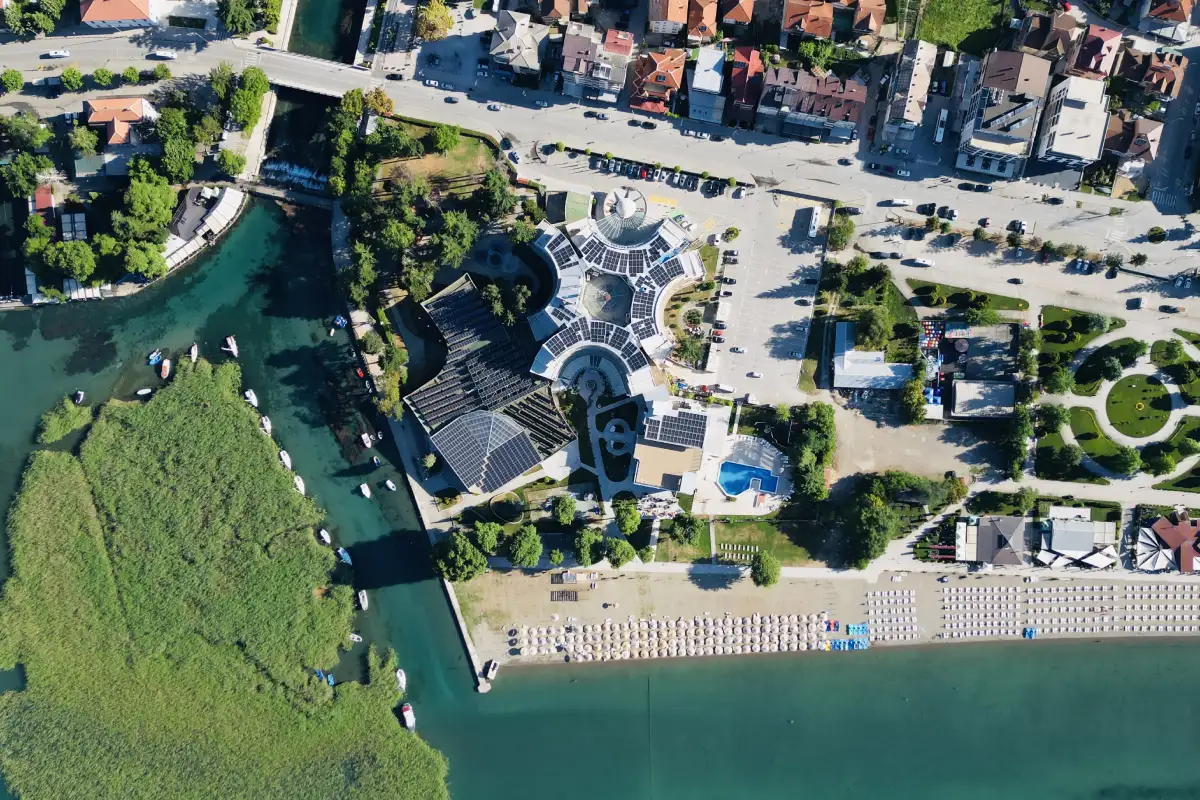
Hotel Drim — Struga, North Macedonia

Conveniently reachable via Ohrid Airport (OHD) and regional connections. Shuttle details and directions will be posted closer to the event.
A glimpse of the venue by Lake Ohrid. Click any photo to view larger.







We are currently finalizing partnership agreements. Our partners will be announced here soon — stay tuned!
Get in touch to become a conference partner today.
 Тechnical Co-Sponsorship by IEEE N.Macedonia Section




We appreciate the support from our community and partners.

CIIT is organized by faculty members from FCSE — Ss. Cyril and Methodius University of Skopje.



(in alphabetical order)
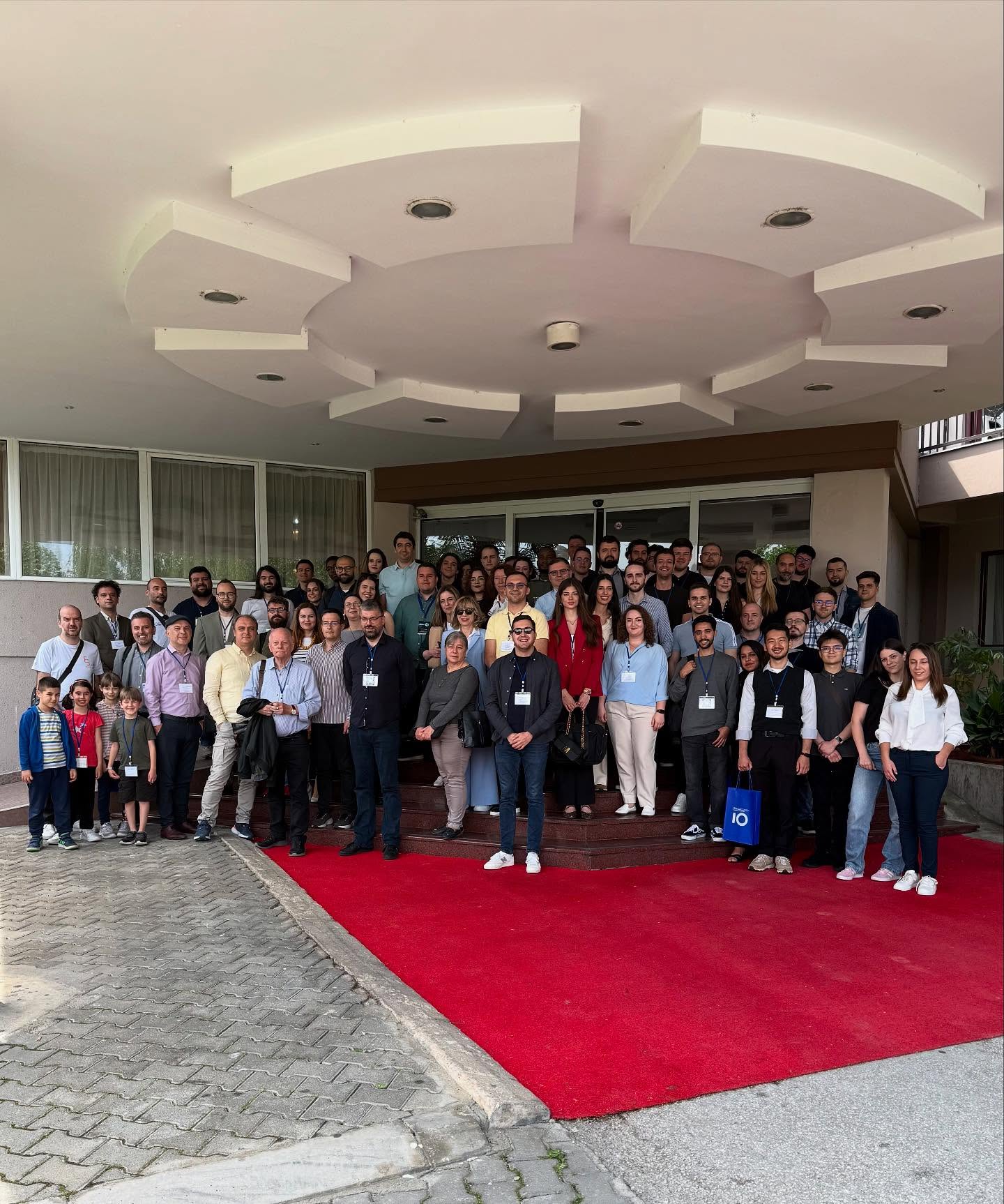
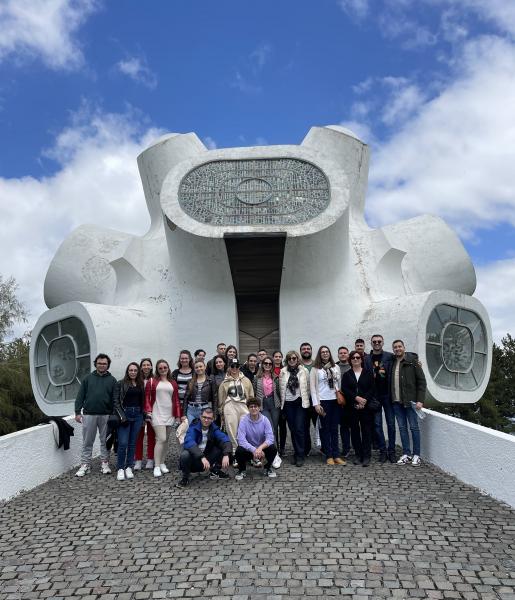
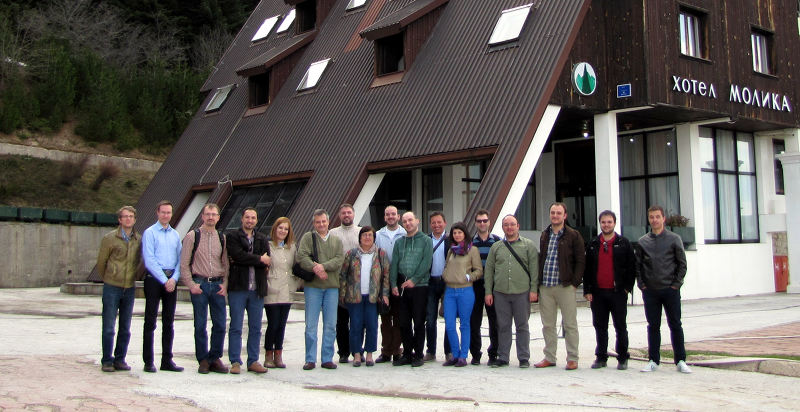
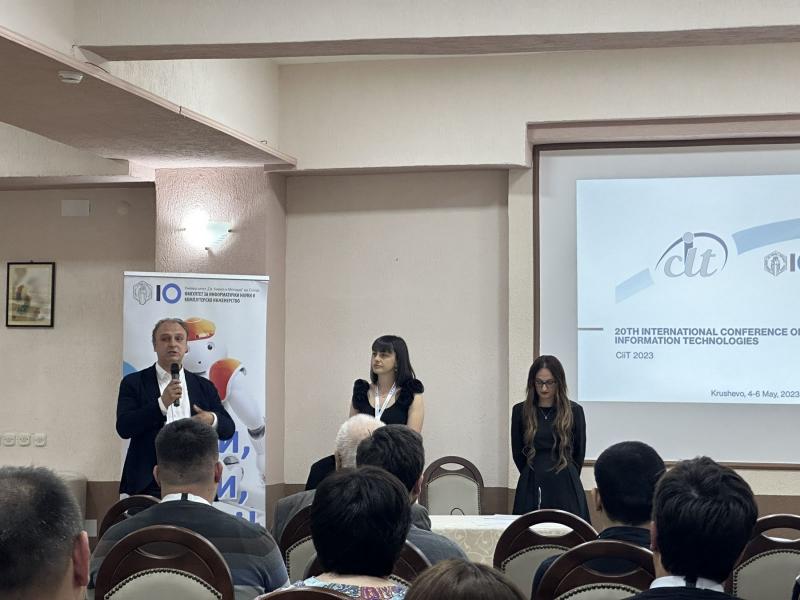
A look back at moments from earlier CIIT editions.
Browse proceedings and archives from past CIIT editions.